Hollows
This is a story about a game that performs three unique feats of magic, tackling some of the biggest challenges I've seen in the world of roleplaying games.
This is a story about learning to tell stories: stories about finding community amidst trauma and loss, stories about digging deep to discover who you might become, and stories about fighting the exact sorts of monsters that you know one day you will become yourself.
This is a story about Hollows.
The Premise
In Hollows (written by Grant Howitt and Chris Taylor, and published by Rowan, Rook & Decard), you and the other players live in The Isles, a rough analogue for the UK at the start of the empire's decline.
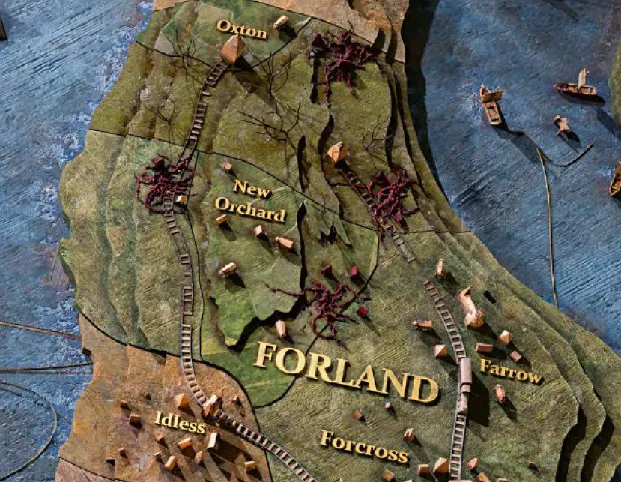
Except: this empire hasn't declined so much as festered. As things have gotten worse, the influence of forces called Malignancies -- idiot parasite gods, crows fighting over scraps of metaphysical carrion -- have started to gain footholds in the world. These ineffable beings wait, unseen, for a person to have the worst day of their life, and use their trauma to plant a seed. They watch that seed as it is nourished by additional pain and suffering, until eventually the host can take no more. At that point, the seed blossoms, and the poor host becomes the Lord of a new Hollow: a horrible pocket dimension, freed of the laws of the real world, where the Lord's trauma plays out again, and again, and again.
Back out in the Isles, around where the Hollow has formed, most people can't perceive the Hollow at all. The player characters are not most people. Each of them carries the seed of a Malignancy from some horrible, painful moment long ago. But rather than succumbing to it, they chose to fight back, using the dark energy within them to find, enter, and cleanse Hollows throughout the Isles.
These characters are Hunters. They know that someday, the seed they carry will also blossom, dooming them to become the center of their own Hollow. Someday, their friends will decide to enter that Hollow, either taking on a rescue mission1, or a mercy killing. Their story will come to a doomed conclusion, one way or another.
So: right out of the gate, you face two unpleasant truths about your character. The story about the horrible thing that happened at the heart of their backstory, and the rough shape of the horror that waits for them. But Hollows isn't about grim acceptance of your fate. It's about knowing what's coming, and accepting that it's awful, and nevertheless choosing to fight back, trying to make a difference with what time you have left.
Hunters and Weapons
Player characters in Hollows don't have standard classes. What they have instead are Weapons.
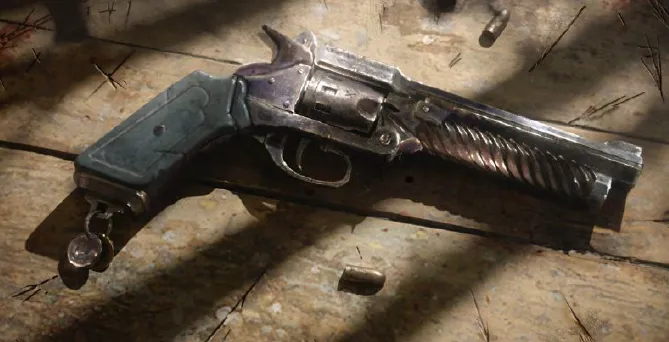
Each Weapon is itself a sentient thing filled with dark, malignant powers. A unique representation of some type of toxic masculinity, forever goading its wielder into acts of violence, filled with open contempt for the person holding it. Each Hunter gets two of these weapons.
Alongside the Hunter's seed story, the weapons do a lot of heavy lifting to define the Hunter's personality. More, they suggest how your Hunter is likely to act in combat. Holding a rifle and a shotgun? You'll be keeping your opponent at a distance, taking shots of opportunity and trying to stay ahead of the inevitable reprisals. Armor and a spear? You're a close-in tank, trying to goad the beast into paying attention to you so the back-liners can keep getting their hits in. Staff and a book? You'll float around the fight, keeping your allies alive and upright.
But I must reiterate: these Weapons hate you. They chafe at their impotence, and seethe at how they are mere tools in the hands of an unworthy clod. And yet, as they grow more and more powerful, so too will your Hunter's ability to fight through the denizens of a Hollow.
Magical Feat #1: Fun, Tense Boss Battles
Boss battles are notoriously hard to pull off in RPGs. Every system handles them a little differently -- some use detailed battle maps, many use player-specific combat abilities, some go rules-light and keep the fight narrative. And all of these systems are perfectly capable of delivering fun to the players! Except ... sometimes, the fights go on for hours. Sometimes things veer into record-keeping, breaking out rulers and cone templates. Sometimes you just don't feel the sense of danger right out of the gate.
Enter the Hollows grid system, which wrestles these problems to the ground and makes them squeal:
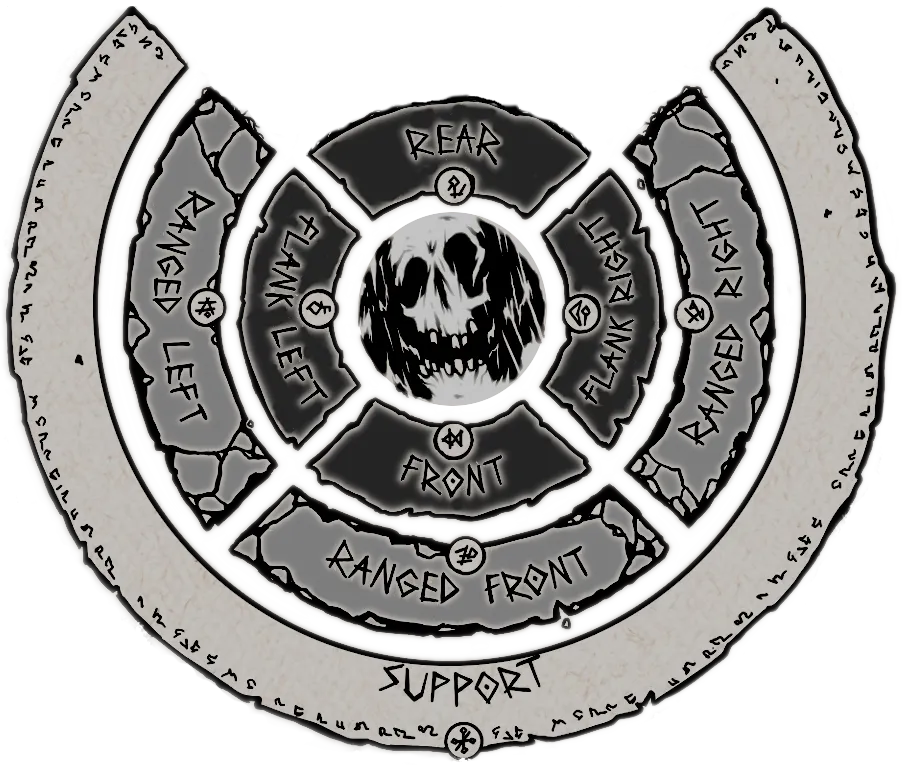
The grid gives the players a sort of lock-on targeting that will feel immediately familiar to anyone who has played Bloodborne, Elden Ring, or other FromSoft games. The monster you're facing will always be at the dead center of the playing field, and the Hunter positioning is always defined relative to that monster (close or ranged, front/left/right, etc.). This is a clean, simple way to keep an evolving combat situation easily understandable at a glance for the whole table, whether it's modeling how things look as the Hunters move around the creature, or what happens when the creature itself moves or turns around.
Making the fights easy to understand and track leaves more mental space for the important bits: adding the cinematic vibes that will make the fight tangible and memorable. It's the difference between saying "you fail your defense roll and take four wounds" and saying "the creature bellows and swings its hammer at your chest; you crouch to leap out of the way, but your foot slips at the exact wrong moment, and the weapon impacts against your ribcage with a wet, audible crack."
The FromSoft comparison -- especially BloodBorne, an explicit touchstone for Hollows -- becomes even more apt when the monsters start hitting back. Every fight is different, but they are typically designed to be deadly. If you fail to avoid an attack, you might lose half of your life immediately, or worse.
During a fight, it's not uncommon for Hunters to be killed. Sometimes, fights will even end in ignominious total party kills. This is not a system flaw. It's the RPG feature you never knew you wanted, a bloody swath of butcher's paper wrapped around the most unsettling piñata you've ever seen. (Stay with me. It's better than it sounds.)
Magical Feat #2: Satisfying, Rewarding PC Deaths
For years, countless RPG systems have trained players to view PC death as a fail state. Not just a "that wasn't how we hoped things would play out" fail state, but a tragic moment that represents a loss of progress, a blunt end to backstories and potential, a story brought to conclusion too soon.
But what if your character's death was an evolutionary moment, rather than a coarse, blunt end to their story?
Because Hunters don't die in Hollows, not really. Those killing blows cause the Hunter to flicker back out of the Hollow, only to reappear in the group's Refuge -- a little pan-dimensional island of respite, the place where you and your fellow Hunters rest and recover2 from all the horrors you're forced to face again and again -- fully healed and ready to pop back into the Hollow once the current fight is over.
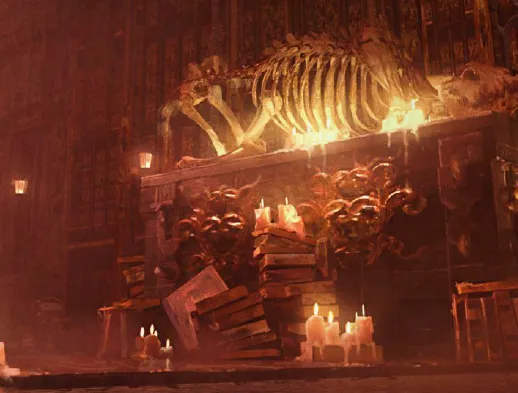
Except: they've been changed. Every death gives you a new malignant echo that will start following you through the Hollows you visit. Maybe the echo changes your weapon for better or worse. Maybe it will introduce you to an effigy of the Malignancy that's planted your Hunter's seed, a stark reminder of the doom that's yet to come.
Or maybe -- and this is such a juicy, wonderful bit of witchcraft that it almost hurts to write -- bits and pieces of your Hunter's backstory will start breaking into the Hollows. Characters you might rather forget, acting out events you might wish hadn't happened, all out there for everyone to see. Letting your friends see exactly what was so tragic about this one traumatic moment in the Hunter's past, and giving the group a chance to fight back against those story beats as a group.
However, there's a ticking clock attached to your immortality. Every death ticks up your Hunter's Corruption counter. You then roll a d20, and if you roll under your Corruption3, guess what: your Hunter teleports to the site of their Worst Day Ever, blossoms, and becomes the center of a brand new Hollow.
By the time you reach that moment, all of those in-game backstory beats you've played through will end up making these moments -- the blossoming itself, and then the group's journey into their Hollow -- unexpectedly meaningful for the whole table. Even the decision of whether to anchor the Hunter to the Refuge becomes fraught and tense: is this really what they would have wanted, an endless life as a phantom, nailed to a place they can never leave? Would killing them actually be more merciful?
I've taken to saying "great news, you've been killed" the first time a new player's Hunter goes down. They usually think I am being flippant. I am not. I am genuinely excited to start that player on the next stage of their Hunter's journey, and to see what changes will result.
Magical Feat #3: Growing New GMs and Game Designers
Eventually, the players will discover4 that the purpose for the Hollows -- or one purpose, anyway -- is to transform their Lords into Effigies. The Effigies are puppets of the Malignancies, freed from the prisons of their Hollows, now able to perform their horrible works out in the real world of the isles.
Reader: I put it to you that the greatest magic trick of the Hollows system is an act of similar transformative potency. To wit: the game is designed to turn your players into GMs. And more, it's designed to turn your GMs into game designers.
First, the game gives each player a character with a tragic backstory. Then, it has the players explore those backstories as a group, again and again, until everyone at the table has gotten to understand the depths of these tragedies, the potential avenues of happiness that were closed off, and how the experience of a lifetime cleansing Hollows has changed the Hunters.
And then, once the table has grown to care for these Hunters, one inevitably blossoms. The implicit question hangs unspoken over the table: Who at the table is best suited to tell the last chapter of this Hunter's story, to sing the melody of this Hunter's swan song, to define the warp and weft of the story's final pages?
This question has an obvious answer, but the book helpfully spells it out for you just in case: that Hunter's player will be the GM for the story of their Hollow. Fortunately, the book doesn't just send that player off with a hearty slap on the back and a good-luck-to-you. There's a whole quarter of the book dedicated to advice on how to build a Hollow, and how to fill it with boss monsters, and even how to design monsters that are fun to fight. It's an embarrassment of riches for anyone who already loves telling RPG stories, or who simply wants to learn how.
Not all players will heed this call, but those that do can look forward to a rich, rewarding experience. In the year-long campaign I've been part of, Hollows has been the first ever GM'ing experience for many of our players. All of their stories have been wonderful, and sad, and thrilling, and profound in completely different ways.
Final Thoughts
I first heard about Hollows back in 2023, at an early stage of the game's development. I was immediately drawn in by the theme and premise, but was also skeptical about the execution of the combat engine. I've played enough combat-based RPGs and board games (and designed my own of each) to know that making boss fights play out in a satisfying way is really, really hard.
When I got my hands on the playtest materials, and started playing with characters and fights, I was floored at how well it all came together. It's a dice-based system, so swings of luck will absolutely happen, but I've lost count of how many Hollows fights I've run/played in that came down to a single roll that determines whether the group sees a TPK, or a victory snatched from the jaws of defeat.
Basically: the combat system is really good, like genuinely unfairly good. The weapon abilities are ridiculously fun to mix and match, and as you unlock new abilities from clearing Hollows, you might find yourself losing hours to theory-crafting and build-planning.
But as good as the combat is, it's not even the best part of the game. The combat is the juicy worm on the hook that pulls you in, but it's everything else that makes you care. You'll care about the sad story of your own Hunter. You'll care about the other Hunters in your group. You'll care about your Refuge, and become willing to die to protect it from anything that threatens its sanctity. You'll occasionally even care for the Lords of some Hollows, enough to consider anchoring them to your Refuge rather than killing them outright.
In a game about trauma, and toxicity, and inevitable doom, the greatest magical feat of Hollows is making you come to appreciate the power of the community that surrounds you. But only in retrospect, because you'll be riding high for on adrenaline for at least a few hours after landing that last critical hit on the Blacksmith of Ironhold, just before his terrible hammer would have mashed your buddy into pulp.
You should play Hollows.
ACKNOWLEDGEMENTS: All images in this review are from the Hollows core book, and I believe all of this art was created by Sam Lamont. The physical book should be appearing on shelves in October or November 2026.
Thanks to Alex V for invaluable input and editing of this article. You can see their own Hollows review here.
Notably, the end point of a rescue mission is still categorically Not That Great. The Hunter becomes anchored to the group's Refuge, a pan-dimensional sort of clubhouse, where they will exist, immortal and unchanging, forever. They can never leave.↩
The Refuge ends up being its own character in most Hollows campaigns. It comes with a Keeper and a few sparse appointments, and as you beat up boss monsters, you collect bits and bobs that can be used to make the place nicer. Some upgrades are purely cosmetic and decorative, but many give the group mechanical advantages. It's the heart of the community your Hunters have formed to help keep the group safe and sane amidst a life spent facing down abject horrors.↩
If you're really, really unlucky, this can happen as early as your second death, which admittedly feels pretty bad. We've added a house rule for our Hollows campaign games that allows you to cancel an early blossoming roll by instead increasing your corruption by the value you rolled, and giving yourself a new seed echo. Sometimes players opt not to use this, but it gives a little more agency for you to decide when your Hunter's story is ready for its coda.↩
Alex V does an excellent job articulating the impact of this discovery in his own review of the game.↩